News Releases
CO2 Reduction Project by Collaborative Delivery
Registered First in Japan under J-Credit Scheme
Please click here for a printer-friendly version.

LOGISTEED, Ltd. is pleased to announce that our project to reduce CO2 emissions through collaborative delivery has been registered with the J-Credit Scheme Management. This is the first J-Credit project in Japan to utilize collaborative delivery. This initiative aligns with our environmental policy of providing logistics and services with low environmental impact and materiality (our key management issue) of building and strengthening resilient and sustainable logistics services. It is a measure aimed at achieving carbon neutrality by 2050. We will continue to contribute to the decarbonization of the logistics industry through various initiatives.
Background
Logistics is an essential infrastructure supporting the economy and society, accounting for approximately 20% of domestic CO2 emissions. Particularly, truck-based freight transport consumes significant energy, making the reduction of environmental impact critical. Additionally, as companies address the "2024 issue" with concerns about driver shortages and stricter overtime regulations, there is a need for mechanisms that improve transportation efficiency while reducing CO2 emissions.In response to these social issues, we have promoted transport efficiency through collaborative delivery and registered the project to utilize its environmental value as J-Credit, aiming to contribute to the decarbonization of the entire industry.
Overview of the Initiative
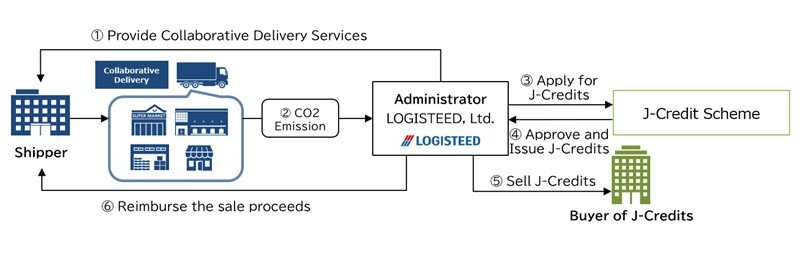
This initiative contributes to carbon neutrality by converting the environmental value created through "collaborative delivery" into J-Credit and circulating it. The project is a "program type" that consolidates similar reduction activities by various entities into one project, allowing the project scale to expand by continuously adding reduction activities from each company. As the Administrator we will aggregate data based on the "collaborative delivery" achievements of shippers and logistics companies participating in the project, apply for credits, and then sell the issued credits and return them to each company. This allows for the creation of credits while reducing the administrative procedures and costs associated with individual registration and review.